When is rhinoplasty surgery necessary? Cost criteria at the time of reoperation
ONEJIN PLASTIC SURGERY CLINIC2026.06.01236 views
When is rhinoplasty surgery necessary? Cost criteria at the time of reoperation





Hello, this is ONEJIN PLASTIC SURGERY.
There is a steady increase in the number of people who are not satisfied with the results after rhinoplasty or are considering re-surgery due to problems over time. In particular, questions about “when should I have a reoperation” and “how much does it cost” are common questions asked by anyone considering rhinoplasty.
This article objectively summarizes the medical criteria for rhinoplasty, how to determine the appropriate timing, and factors that influence cost decisions.
Conditions Requiring Revision Nose Surgery — Medical Decision Criteria

Rhinoplasty is not simply determined by external dissatisfaction. Medically, the need for reoperation is determined based on two main criteria: functional problems and structural problems.
Functional problems are when breathing disorders occur due to nasal septum deformation, tissue compression due to implants, and non-valve stenosis. In this case, reoperation is recommended for functional restoration rather than simply cosmetic purposes.
Structural problems include misalignment of the implant, calcification, skin transparency (the implant is visible from the skin), contracture (hardening of the tissue), and asymmetry. These problems can get worse over time, so it's important to get a professional diagnosis at the right time.
In general clinical cases, the difficulty and scope of reoperation often changes when the above structural and functional problems are present rather than external dissatisfaction after initial nose surgery.
Determining when to reoperate — why it shouldn't be too early or too late

Deciding when to do rhinoplasty is directly related to the completeness of the results. The medically recommended standard is to perform reoperation with sufficient tissue stability at least 6 months to 1 year after initial surgery.
Since swelling and fibrosis reactions actively progress immediately after surgery, if surgery is performed again during this period, there is a high risk of tissue damage, and it is difficult to determine the exact structure. Conversely, if too long has passed, adhesions and scar tissue will thicken, making surgery more difficult.
However, exceptions are emergency situations such as implant infection, risk of skin necrosis due to severe compression, and sudden loss of position. In this case, immediate treatment is required regardless of tissue stabilization.
If you are considering rhinoplasty, you should first confirm with a specialist whether your current condition is a simple psychological dissatisfaction or a condition requiring medical intervention.
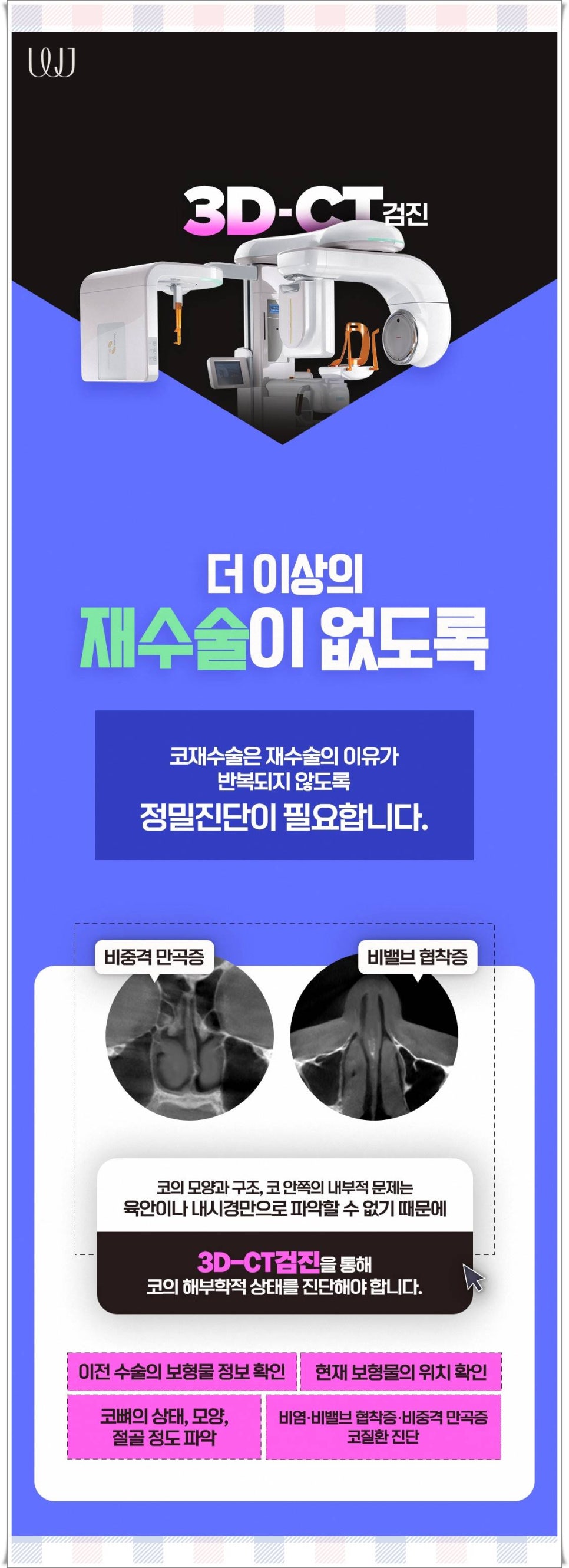
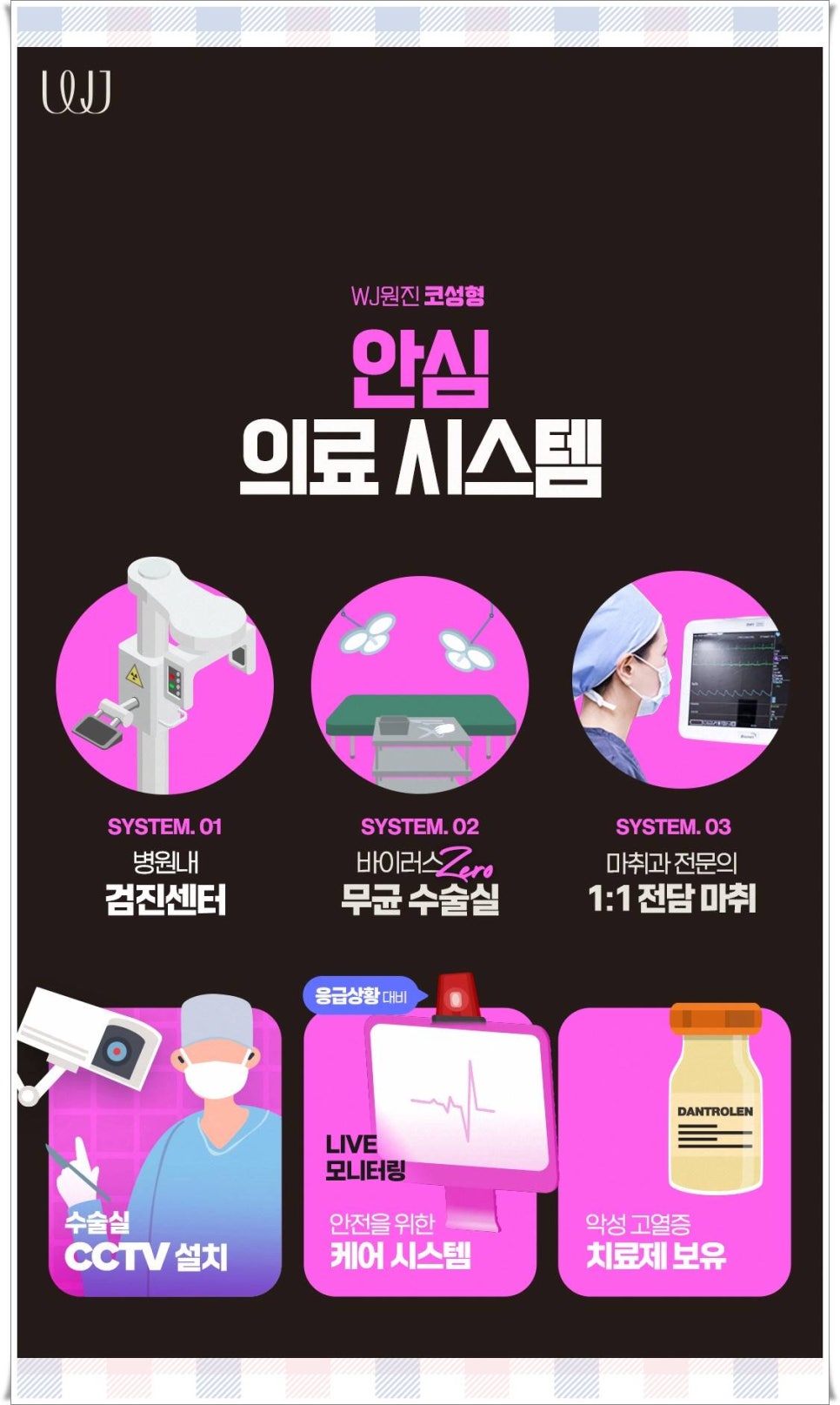
In an environment where medical staff dedicated to each surgical site diagnoses nasal revision surgery, the condition of the implant, nasal septum structure, and surrounding tissue changes are comprehensively evaluated through CT imaging, and then whether to have a reoperation is determined. In this way, image-based precise evaluation is considered an essential process in planning reoperation.
Factors that determine the cost of rhinoplasty

The cost of rhinoplasty is generally higher than initial surgery. The reason for this is not simply re-surgery, but the tissues and structures that have been deformed due to previous surgery must first be restored to their original state before proceeding with a new operation.
The main factors affecting the cost include:
① Scope of reoperation: The scope and time of surgery vary depending on whether only the tip of the nose is corrected or whether the entire structure, including the bridge of the nose and nasal septum, is required. The range is wider as there are complex variations such as hawk nose, slump nose, and stomach nose.
② Materials used: If autologous cartilage (ear cartilage, nasal septum cartilage, rib cartilage, etc.) is used after removing an existing implant, additional surgery is required at the collection site, and the cost structure varies. Autologous cartilage is one of the preferred materials for reoperation due to its high tissue compatibility.
③ Anesthesia method and hospitalization status: The cost structure of simple correction, which can be performed with partial anesthesia, and complex reconstructive surgery requiring general anesthesia is different. If general anesthesia is performed in an environment where an anesthesiologist is present, it is included in the cost category as the level of safety management increases.
④ Scope of care after surgery: The overall cost of treatment may vary depending on dressing immediately after surgery, progress observation, and skin recovery related management.
What is more important than the cost itself is getting an accurate diagnosis of your current nose condition and making sure that the scope and method of reoperation have been properly planned.
The final checklist that makes a difference in the outcome of rhinoplasty

✔ Check the timing of reoperation
Make sure that at least 6 months to 1 year have passed since the initial surgery to stabilize the tissue, and if there are emergency signs such as infection or skin damage, get a specialist diagnosis immediately.
✔ Classification of medical necessities
The beginning of a reoperation plan is to first check whether it is simply dissatisfied with the appearance or whether it is accompanied by functional or structural problems through imaging tests such as CT.
✔ Put scope and method before cost
The cost of reoperation is determined by the scope of surgery, materials, and method of anesthesia. Rather than choosing a hospital based on cost, it is recommended that you first get an accurate assessment of your condition from a dedicated nasal specialist with sufficient reoperation experience.
✔ Check whether there is a dedicated medical staff
Anatomical understanding and reoperation case experience have a significant impact on the outcome of rhinoplasty surgery. It is important to ensure that there is a medical professional dedicated to rhinoplasty.
Since rhinoplasty requires more complicated judgments than initial surgery, we recommend gathering sufficient information and careful consultation with a specialist.
 ONEJIN PLASTIC SURGERY CLINICGangnam Station