The Real Reason You Don't Lose Weight Even If You Run Hard — The Science of Exercise Reward Psychology
Acro Oriental Clinic2026.06.01287 views

Hello, Han Ji-young, Director of Acro Oriental ClinicThis is it.
“I've been running for an hour today, so a piece of chicken would be fine, right?”
Have you ever thought about this after a workout?
It's a very natural feeling to want to be rewarded for sweating.
Unfortunately, there are many cases where this “reward meal” completely detracts from the effects of exercise.
Today, I'm going to summarize the pitfalls created by the brain rather than lack of willpower based on the paper.
Why do we think “I can eat” after exercising?
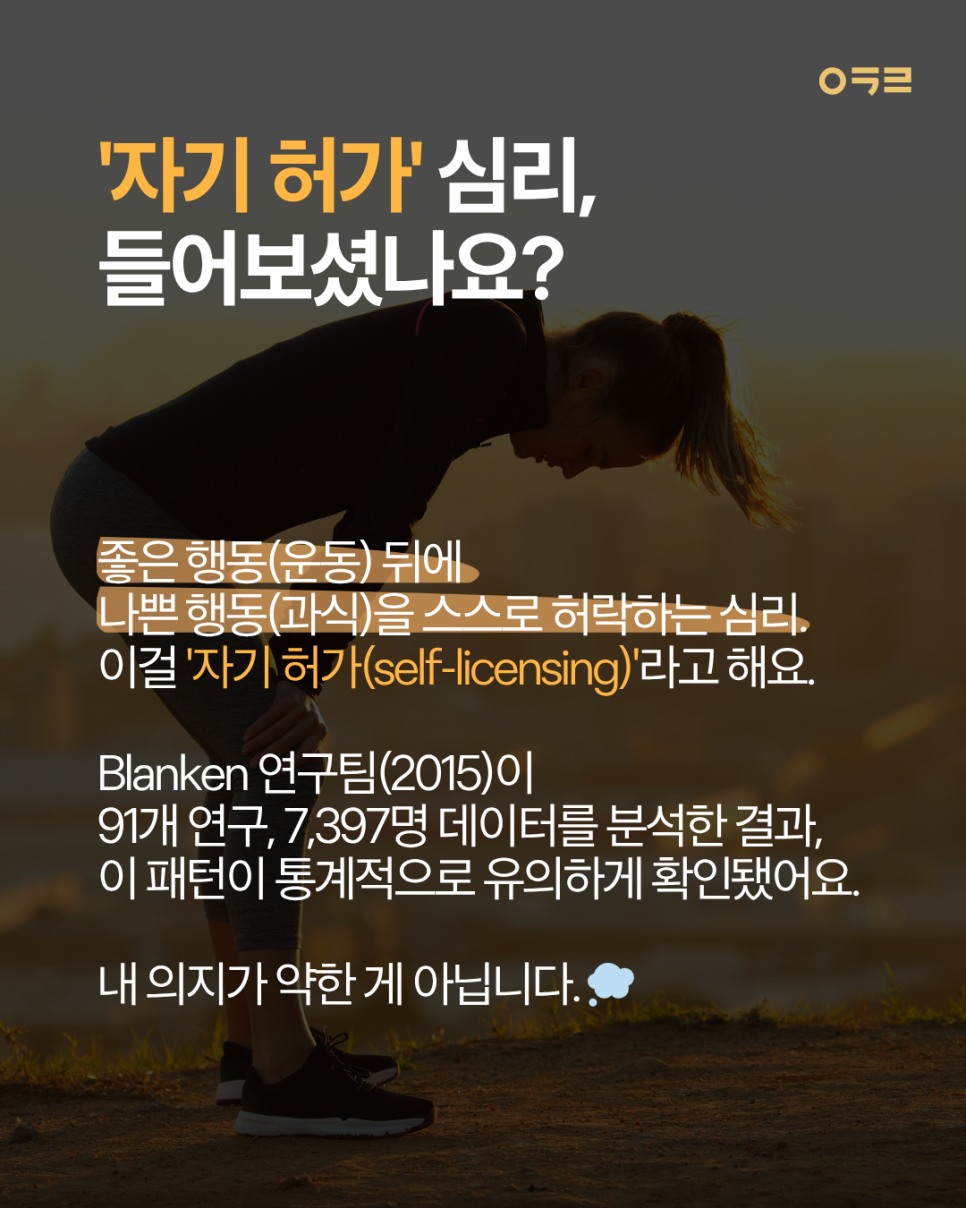
In psychology 'Self-licensing (self-licensing) 'There is a concept called
It's a mentality where after doing good behavior (exercise), you allow yourself to do a little “bad behavior (eating high-calorie food)” next time based on that merit.
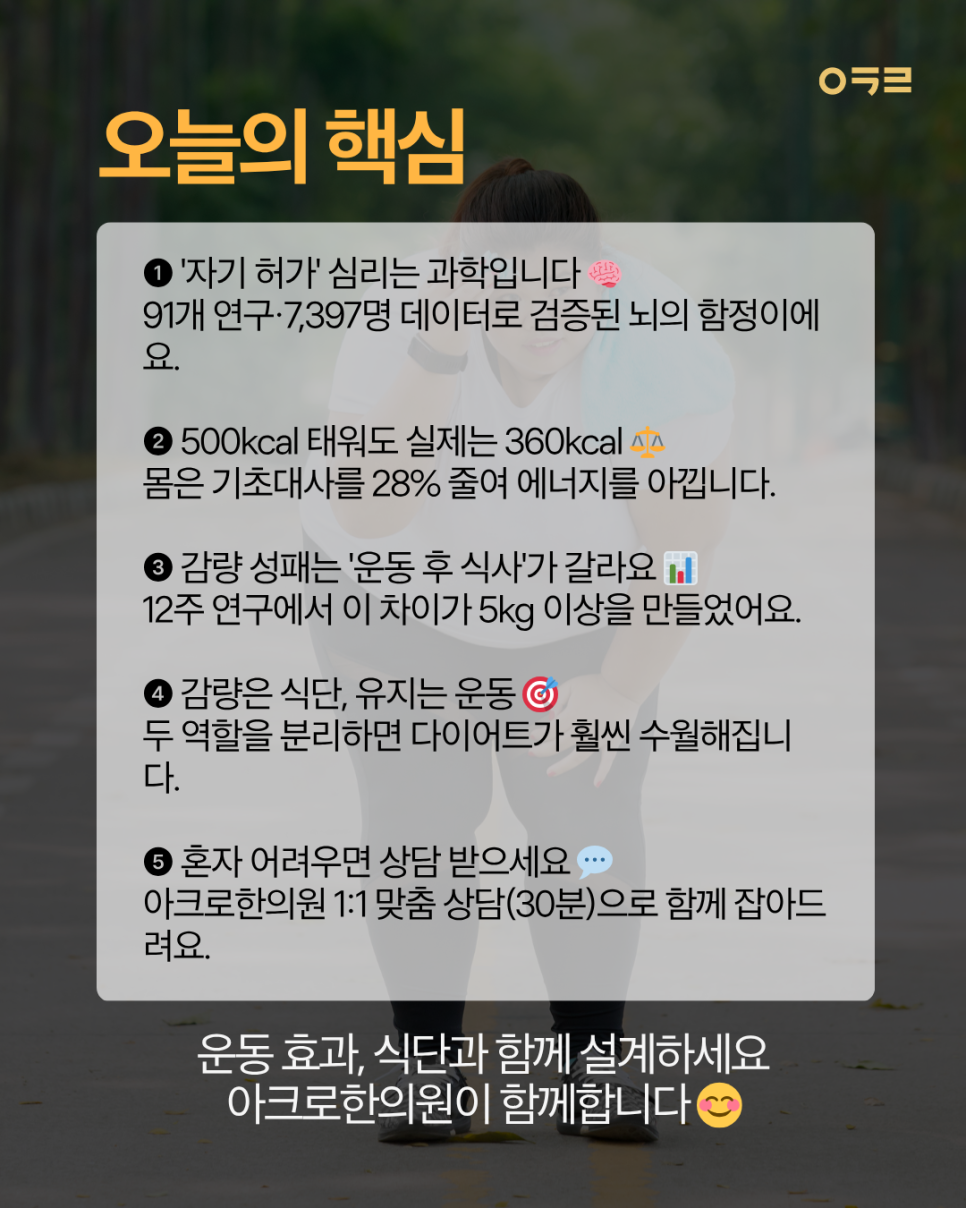
Blanken et al. (2015) comprehensively analyzed data from 91 studies and a total of 7,397 people,
The trend of self-acceptance of bad behavior after good behavior has been statistically significant in various contexts.
The act of allowing high-calorie foods after exercise is also part of this pattern.
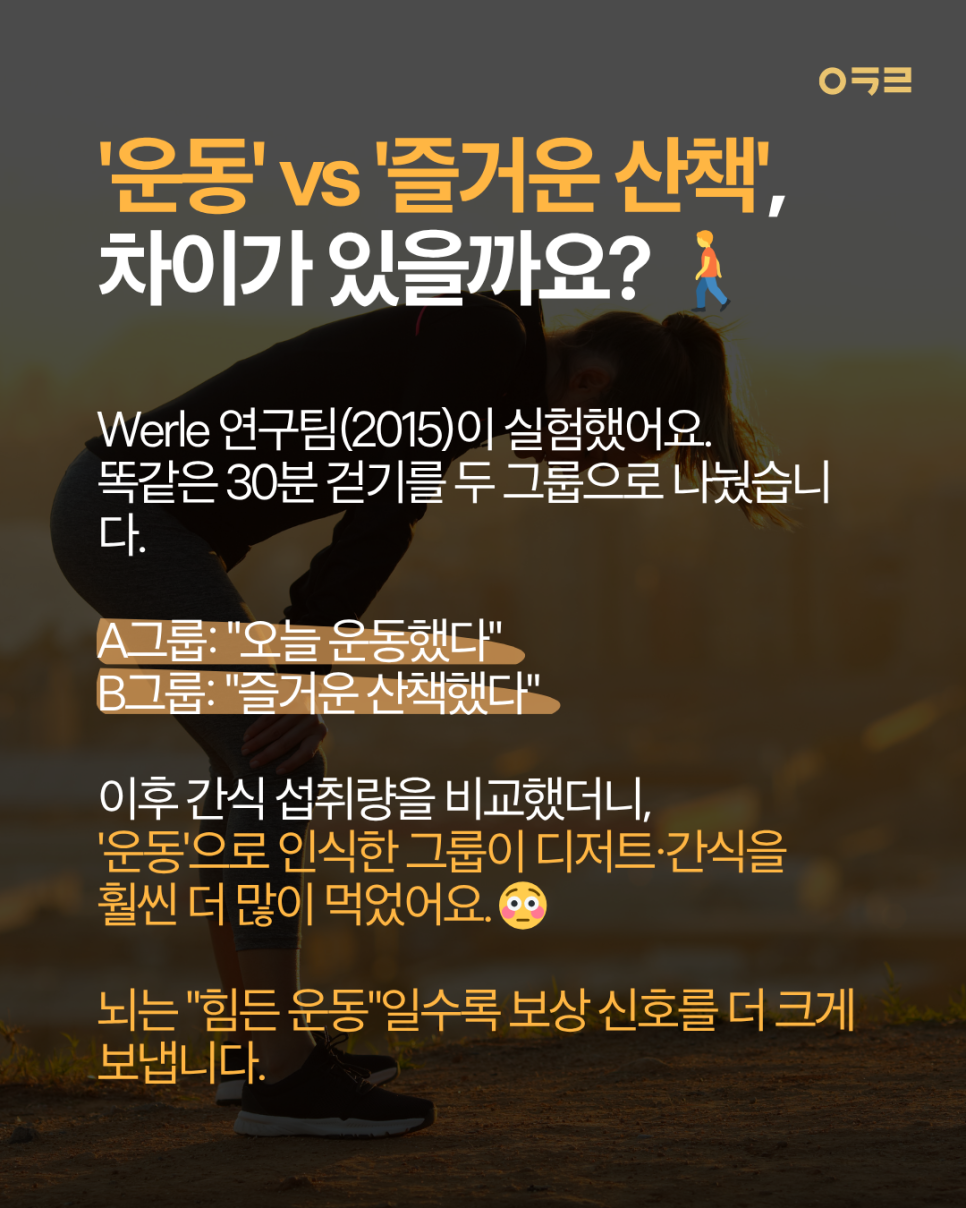
The study by Werle et al. (2015) directly tested this phenomenon in the context of exercise.
We compared the group that framed the same 30-minute walk as an “exercise (exercise)” with a group framed as a “fun walk (fun walk).”
The group that perceived it as an “exercise” subsequently consumed significantly more desserts and snacks.
In other words, if you accept the same physical activity as a “difficult exercise,” the brain will send a stronger reward signal.
Why doesn't the scale jump even when I run hard?
“Director, why can't I lose weight when I exercise really regularly?”
This is the most frequently asked question in the doctor's office.
One reason is our body's energy conservation system.
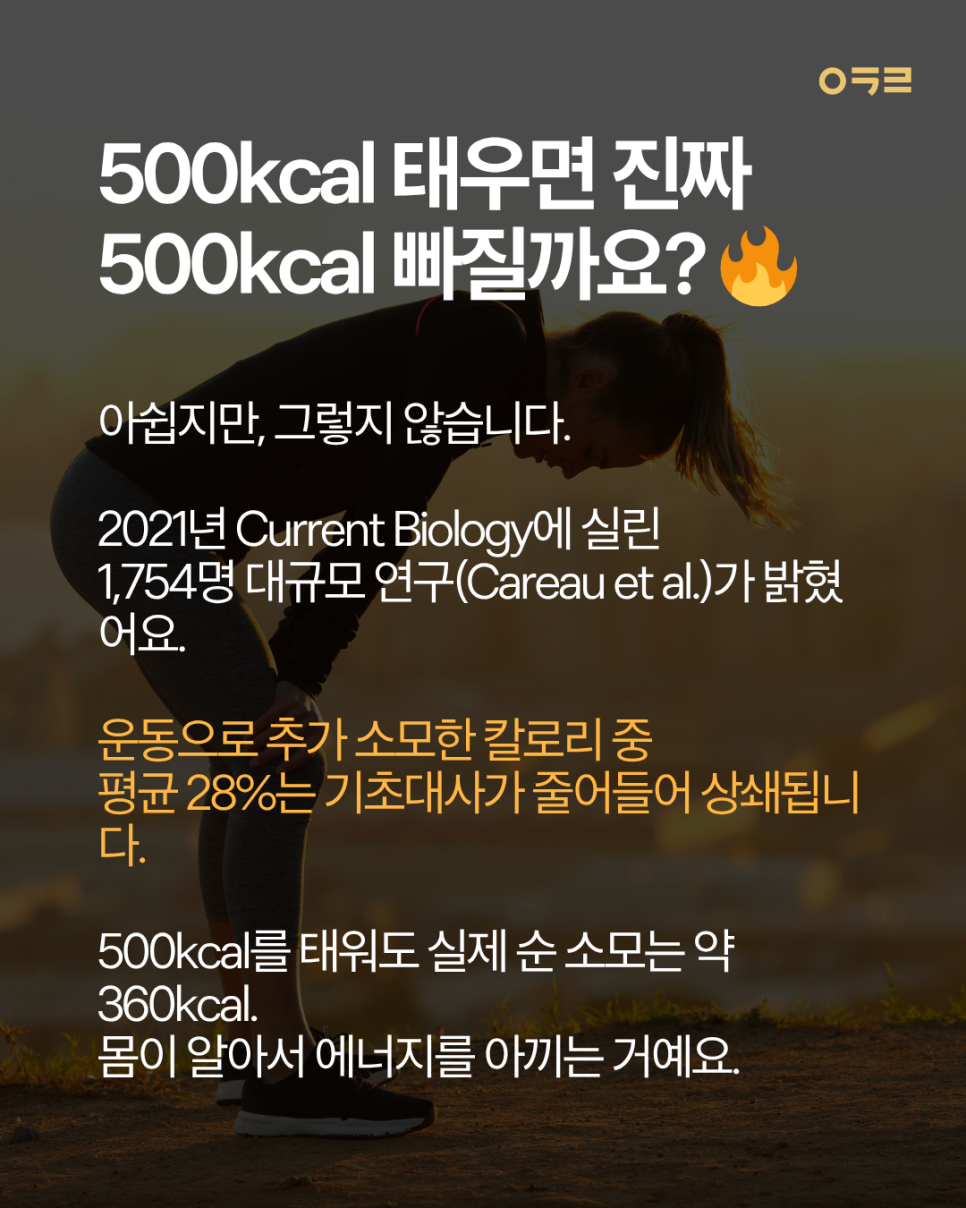
A large-scale study by Careau, Halsey, Pontzer and others (n=1,754) published in Current Biology in 2021 clearly shows this phenomenon.
As a result of analyzing adults' daily energy consumption and basal metabolism data, it was confirmed that basal metabolism (BEE) decreases as activity increases, which partially offsets the increase in total energy consumption.
Here are the key figures:
• Average of additional calories burned by activity 28% is offset by a decrease in basal metabolismIt will be.
• In other words, even if you burn 100 kcal more with additional activity, the actual net additional consumption is only about 72 kcal.
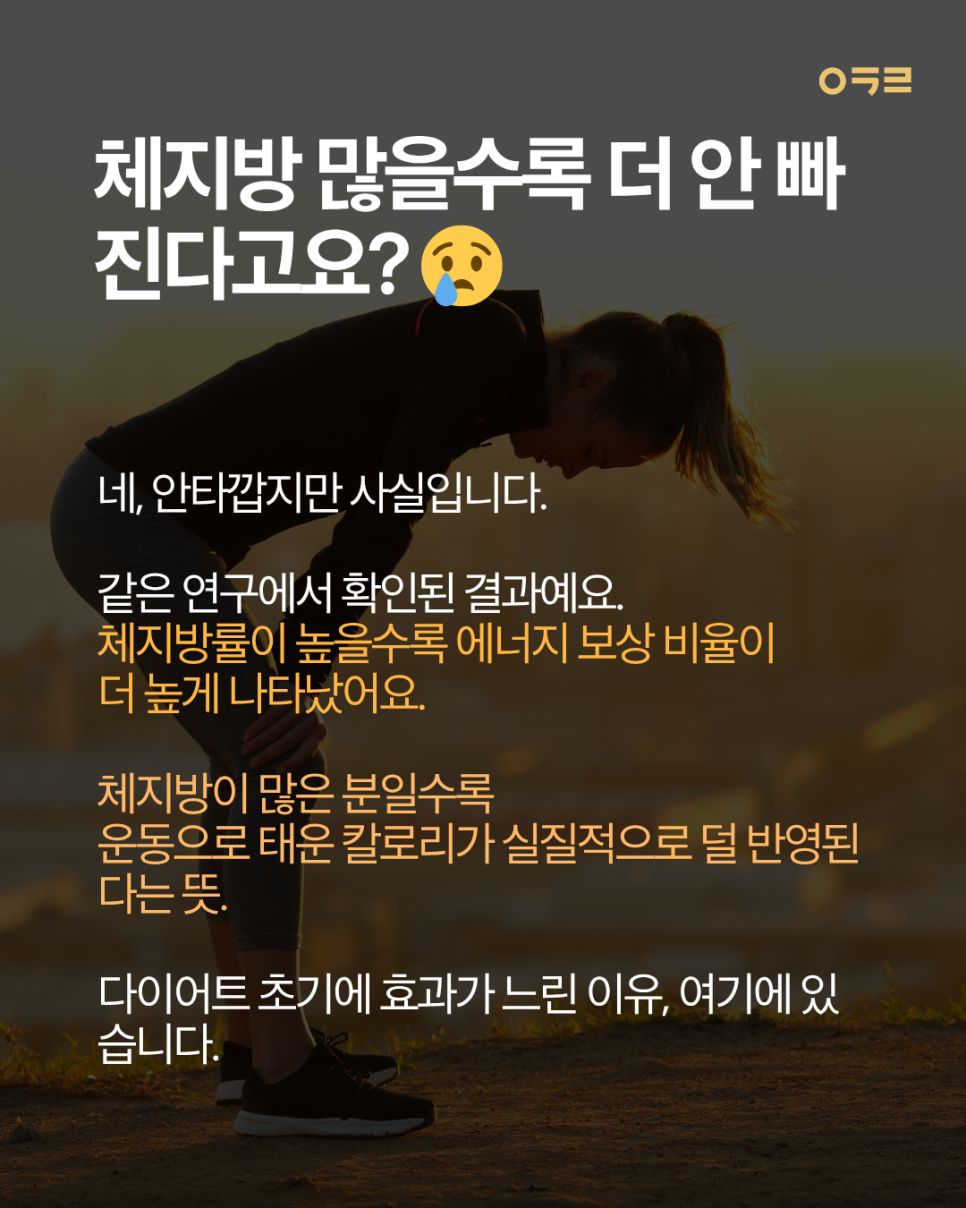
• The higher the body fat (adiposity), the higher this energy compensation ratio It appears.
This means that people with a higher body fat percentage can actually reflect less energy consumed by exercise.
This is one reason why the effects of exercise seem slower than expected in the early days of a diet.
What was the difference between those who lost even after 12 weeks of exercise and those who didn't?
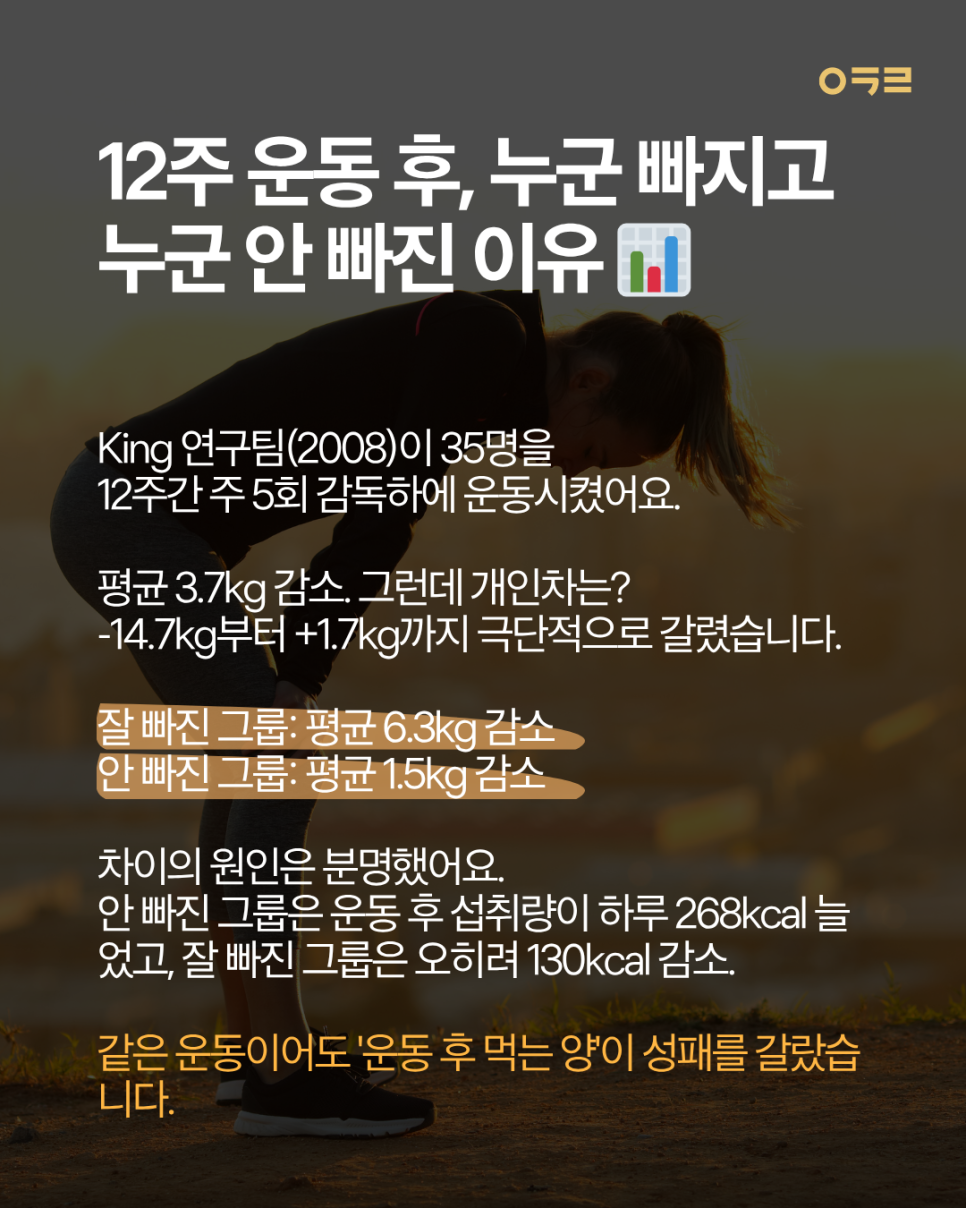
A study published by King et al. (2008) in the International Journal of Obesity answers this question.
Thirty-five overweight and obese adults (average BMI 31.8) were given supervised exercise 5 times a week for 12 weeks and weight changes were observed.
The overall average seemed to have dropped “as expected” with a decrease of about 3.7 kg, but the individual variation was very large, from -14.7 kg to +1.7 kg.
• Poor group (non-compensator): average loss of 6.3 kg
• Poor group (compensator): Average loss of 1.5 kg
The reason for the difference was clear.
While the average intake of the underperforming group increased by about 268 kcal per day after exercise, subjective hunger also increased significantly.
Rather, the group that fell well reduced their intake by an average of 130 kcal.
Although it was the same exercise program, the “change in the amount eaten after exercise” divided the success or failure of weight lossThat's the conclusion.
“Exercise for metabolism, diet for weight loss”
During consultations, I often see people who are discouraged, saying, “Why don't you miss exercising when you work really hard?”
Every time that happens, I have something to say.
“It's not because the patient's will is weak.
This is because the body's energy conservation system and the brain's reward circuitry work together.”
When our body uses a lot of energy, it tries to save it elsewhere,
The brain sends a signal that “you can eat it as a reward” after exercise.
This is close to a survival mechanism refined over tens of thousands of years of evolution.
Therefore, the direction of the diet strategy is set in this way.
• The role of exercise — Maintaining basal metabolism, muscle mass, and metabolic flexibility rather than losing weight.
• The key to weight loss — Dietary control, that is, creating a stable calorie deficit.
• When you approach the two separately, dieting becomes much easier.
It's easy to get frustrated if you think of exercise only as a “weight loss tool.”
Rather than losing weight directly, exercise is more of a process that maintains overall metabolism, such as basic metabolism, cardiovascular function, and insulin sensitivity.
In other words, weight loss is caused by diet control, and it is exercise that preserves the results for a long time.
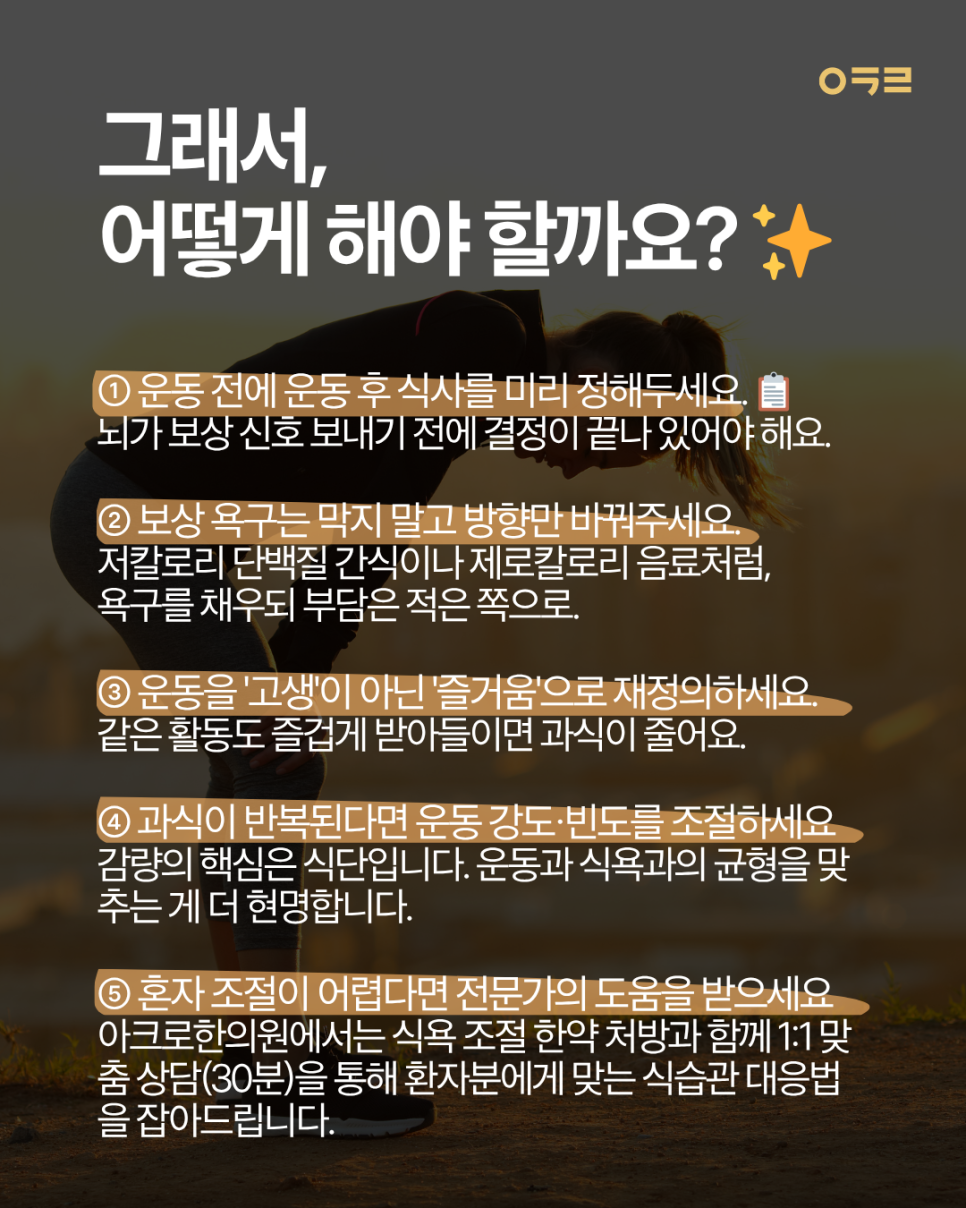
If so, what should I do from today?
1. Set a pre-workout meal before and after a workout.
When decisions are made before the brain sends out reward signals, impulsive choices can be greatly reduced.
2. If you have a compensatory appetite, replace them with low-calorie/zero-calorie snacks.
Chicken breast, eggs, Greek yogurt, zero-calorie drinks, etc. — rather than blocking the desire for compensation, they divert the direction to something that is good to fill.
3. Turn exercise into an activity you enjoy rather than a “struggle.”
Accepting the same activities with pleasure reduces compensatory overeating tendencies (Werle et al., 2015).
4. If it still repeats, adjust the intensity and frequency of exercise.
The key to weight loss is diet. If exercise causes repeated overeating, it is wiser to balance your appetite by reducing the intensity or frequency.
5. If you have trouble adjusting on your own, seek professional help.
Acro Oriental Clinic will prescribe Chinese medicine to control appetite and determine how to respond to the patient's eating habits through 1:1 customized consultation (30 minutes).
Don't be impatient. If you understand scientific principles and approach the roles of exercise and diet separately, dieting becomes an exhausting journey.
Acro Oriental Clinic will always support you to find a healthy way to manage your weight.
Frequently Asked Questions (FAQ)
Q1. Is it normal to feel hungry after a workout?
Yes, it's a natural phenomenon. However, there are large individual differences, and according to a study by Finlayson et al. (2009), some people (compensators) may have stronger unconscious cravings for high-fat and high-sugar foods. If you're close to this type, it's helpful to plan your post-workout meals in advance.
Q2. If I burn 500 kcal per day through exercise, do I really burn 500 kcal?
It's not. According to a large-scale study by Careau et al. (2021, Current Biology), an average of 28% of calories burned by additional activity are offset by a decrease in basal metabolism. In other words, the actual net consumption of an additional 500 kcal activity is close to about 360 kcal.
Q3. So is exercise meaningless in dieting?
That's not the case. Rather than being a direct means of weight loss, exercise is a key pillar for maintaining and improving basal metabolism, muscle mass, insulin sensitivity, and cardiovascular health. The main engine for weight loss is diet control, but to prevent yo-yo and maintain a healthy body composition after losing weight, it is recommended to combine exercise.
Q4. Does' fun 'exercise reduce the sense of reward?
In a study by Werle et al. (2015), groups that perceived the same activity as a “pleasant walk” consumed fewer snacks and desserts later than the group that perceived it as “exercise.” It's worth noting that psychological framing can influence actual eating behavior.
Q5. How does Chinese medicine work on this 'reward mentality'?
Reward psychology is a problem where the brain's appetite signals and psychological permission work at the same time, so a drug approach alone may not be enough. Acro Oriental Clinic examines compensatory overeating patterns through 1:1 customized consultations (30 minutes) along with Chinese medicine prescriptions (appetite control+ metabolic activation support) tailored to the constitution, weight, and medical history, and also provides practical response strategies tailored to patients.
 Acro Oriental ClinicSinnonhyeon Station